Dallas Electrocution Accident Attorneys
Trial-Ready Representation for Construction Electrical Injuries
Electrical contact on a construction site can cause severe injuries even when the damage is not immediately visible. Power-line contact, defective wiring, damaged tools, grounding problems, and unsafe temporary power systems can lead to electrical burns, internal injuries, abnormal heart rhythms, nerve damage, or secondary injuries from falls.
If you were shocked or burned while working on a Dallas construction site, MR.LAW Accident and Injury Attorneys can evaluate how the incident occurred, which companies were involved, what insurance or workers’ compensation coverage applies, and whether a civil injury claim may be available.
Our firm brings more than 20 years of accident and injury law experience to serious workplace and construction accident claims. Led by trial attorneys Damon Mathias and Ori Raphael, MR.LAW prepares cases around the evidence and legal relationships involved rather than treating every workplace injury the same way.
We offer free consultations 24/7 and handle personal injury matters on a contingency fee basis.
Call (469) 689-0200 today for a free consultation with a Dallas electrocution accident attorney.
Common Electrical Hazards on Construction Sites
Construction sites can expose workers to several types of electrical hazards.
Power-Line Contact
Overhead and buried power lines can create severe electrical risks for workers using cranes, aerial lifts, scaffolding, excavation equipment, and other machinery.
A crane accident involving an energized overhead line, for example, may require review of equipment positioning, work planning, applicable clearance requirements, supervision, and the actions of the companies involved.
Underground electrical lines can also become relevant during excavation or trenching work. Utility-locate records, site plans, markings, and communications may help establish what information was available before digging began.
Temporary Wiring and Ground-Fault Hazards
Temporary electrical systems, extension cords, portable tools, and worksite receptacles can create electrical hazards when equipment is damaged, improperly grounded, exposed to moisture, or used without required protective measures.
Ground-fault circuit interrupters, commonly called GFCIs, are designed to interrupt certain ground-fault currents quickly. They are an important safety measure, but they do not protect against every electrical hazard, including direct contact with energized power lines.
Defective Tools and Equipment
An electrical injury can also involve a defective product rather than, or in addition to, unsafe site practices.
When a tool, electrical component, lift, generator, or other product may have malfunctioned, the investigation may need to consider design, manufacturing, maintenance, warnings, prior repairs, and the condition of the equipment after the incident. These circumstances can raise issues separate from an ordinary construction negligence claim and may involve product liability.
Electrical Injuries Can Extend Beyond the Initial Burn
Electrical injuries can affect both the surface of the body and internal organs and tissues.
Depending on the current, voltage, duration of exposure, and path through the body, an injured person may experience:
- Electrical or thermal burns
- Heart rhythm disturbances or cardiac injury
- Muscle or nerve damage
- Numbness or weakness
- Secondary fractures or head injuries from a fall
- Other internal injuries that are not immediately visible
Workers who suffer serious electrical contact may also require treatment for burn injuries or injuries caused by a secondary fall.
Medical records can later become important evidence of diagnosis, treatment, physical limitations, and the longer-term effects of the injury.
Which Legal Claim Applies After a Texas Workplace Electrical Injury?
For an injured construction worker, one of the first legal questions is often not simply who caused the electrical hazard. It is which claim system applies.
Texas generally allows private employers to choose whether to provide workers’ compensation insurance. That creates several possible paths.
If Your Employer Has Workers’ Compensation
For an employee covered by Texas workers’ compensation, workers’ compensation benefits are generally the exclusive remedy against the subscribing employer for a work-related injury.
That does not necessarily eliminate claims against other companies.
A worker receiving workers’ compensation benefits may also have a separate third-party claim when another person or business is legally responsible for the injury. In an electrical case, a potential third party might include a contractor, subcontractor, equipment manufacturer, maintenance company, or another entity whose conduct contributed to the incident.
If Your Employer Is a Non-Subscriber
A private employer that does not provide Texas workers’ compensation coverage is commonly called a non-subscriber.
An injured employee may be able to bring a negligence claim against a non-subscriber employer when the facts support it. Texas law requires the employee to prove employer negligence, but it restricts certain defenses that would otherwise be available in an ordinary negligence case.
Coverage status should therefore be verified rather than assumed.
Workers’ Compensation Deadlines Are Different
For Texas workers’ compensation benefits, an injured worker generally must report the work-related injury to the employer within 30 days. A DWC Form-041 generally must also be filed with the Texas Division of Workers’ Compensation within one year to protect the worker’s rights to benefits.
Civil lawsuits follow separate limitation and notice rules.
Call (469) 689-0200 to schedule a free consultation with our team.
Who Else May Be Responsible for an Electrical Injury?
Construction projects often involve multiple companies with different responsibilities.
Depending on the facts and applicable law, an investigation may examine:
- General contractors or subcontractors that controlled relevant work
- Electrical contractors responsible for wiring or temporary power
- Companies responsible for equipment inspection or maintenance
- Utility or locating entities whose conduct contributed to the electrical contact
- Manufacturers or sellers of defective electrical equipment
- Property owners, where Texas law permits a claim
The presence of a company on the project does not automatically make it liable.
For example, Texas Chapter 95 can limit certain claims against property owners arising from the condition or use of an improvement being worked on by a contractor or subcontractor. In cases covered by that statute, issues such as retained control, actual knowledge of the danger, and adequate warnings can become important.
MR.LAW examines who controlled the relevant work, who created or knew about the hazard, and which legal duties actually applied before deciding which parties should be included in a claim.
OSHA Rules and Electrical Safety Evidence
OSHA construction standards address electrical hazards such as power-line contact, grounding, ground-fault protection, wiring, and safe use of electrical equipment.
OSHA records can be useful evidence in understanding the conditions that existed at a worksite. Relevant material may include:
- OSHA investigation reports or citations
- Electrical inspection records
- Wiring and grounding documentation
- Utility-locate requests and marking records
- Equipment maintenance and repair records
- Photographs and videos
- Witness information
- Work orders and contractor communications
An OSHA violation does not by itself establish civil liability. The applicable Texas claim still depends on the legal duty, conduct, causation, and damages involved.
Electrical evidence can also change quickly as construction continues, equipment is repaired, temporary wiring is removed, or a work area changes. Identifying and preserving available information can therefore be an important early part of the investigation.
Compensation Depends on the Type of Claim
The benefits or damages available after an electrical injury depend on the legal path involved.
Workers’ compensation provides a statutory benefit system with its own rules.
A separate negligence or third-party claim may permit recovery of damages supported by the evidence, which can include:
- Medical expenses
- Lost income
- Reduced earning capacity
- Physical pain
- Mental anguish
- Physical impairment
- Disfigurement
- Other supported losses
No particular category of damages is automatic. The available recovery depends on the injury, applicable claim, evidence, and Texas law.
Texas generally applies a two-year limitations period to personal injury lawsuits, but exceptions and other notice requirements can apply. Workers should not assume that every workplace claim shares the same deadline.
How MR.LAW Handles Serious Electrical Injury Claims
MR.LAW combines trial-ready litigation with a high-touch approach to client communication.
At the beginning of a case, our team can review the electrical incident, employment relationship, companies involved, available coverage, medical treatment, and evidence that may need to be preserved.
We also use Filevine to keep clients connected with their cases. Clients can send information and photographs through a case-specific text number, and the system creates date-stamped communications and notes.
That technology supports the broader MR.LAW approach: clients remain active partners in the case while the legal team investigates the responsible parties, develops the claim, and prepares for negotiation or trial when appropriate.
Trust Our Team at MR.LAW

-
Causes of Construction Accident Injuries
In 2020, the Occupational Safety & Health Administration, or OSHA, reported the construction industry as one of the top two most dangerous work environments in the country.
OSHA cites the top four causes of the “Fatal Four” construction accidents as the following:
- Falls - The leading cause of construction worker deaths
- Being struck by objects - Including falling tools and equipment
- Being caught in between objects - Machinery and structural collapses
- Electrocution - Power line contact and electrical hazards
Other causes of construction injury accidents may include:
- Heavy equipment and crane accidents
- Welding accidents and burn injuries
- Power tool accidents and lacerations
- Fires and explosions on job sites
- Toxic chemical exposure and respiratory injuries
Any of the above accidents can cause life-threatening or fatal injuries to an unsuspecting construction worker.
-
Responsibility for Construction Accident Injuries
When a construction accident occurs, one party or several different parties may be liable for the resulting injuries. A thorough forensic investigation, including witness interviews, will assist a construction accident attorney in determining liability.
Liable parties in construction accidents may include:
- A coworker who acted negligently
- An equipment manufacturer with defective products
- A contractor or subcontractor who violated safety protocols
- A property or building owner who failed to maintain safe conditions
- A driver operating vehicles on the construction site
- A visitor to the site who caused dangerous conditions
Employers and supervisors may also be liable for construction accidents when they fail to provide safety instructions for assigned duties or violate OSHA regulations.
-
Types of Construction Accident Injuries
Although construction sites are heavily regulated on both the federal and state levels, some employers choose to ignore these regulations in an attempt to save time and money. This neglect can lead to construction injuries.
The most common injuries sustained in construction accidents include:
- Broken bones and fractures from falls
- Burns from welding, electrical, and chemical exposure
- Cuts and lacerations from power tools and machinery
- Eye injury or loss of sight from flying debris
- Ear injury or loss of hearing from loud machinery
- Muscle injury and soft tissue damage
- Paralysis and other spinal injuries from falls and crushing
- Repetitive stress injury, such as carpal tunnel
- Head and brain trauma - often catastrophic and permanent
- Death - tragically common in the construction industry
Construction accident injuries are some of the most serious accidents and can require repeated surgeries and long-term medical care.
-
Compensation for Construction Accident Injuries
While the amount of compensation for every construction accident injury case will vary, typical monetary damages in construction injury lawsuits include:
- Medical bills, both current and future treatment costs
- Surgeries, medical supplies, and rehabilitation expenses
- Home health assistance for daily living needs
- Home and vehicle modifications for disability accommodations
- Pain and suffering compensation for physical and emotional trauma
- Lost wages from time away from work
- Loss of income and diminished earning capacity
To learn more about compensation available in your construction accident lawsuit, contact an experienced Dallas construction accident attorney.
-
OSHA’s Rights for Workers
OSHA provides construction workers a number of rights, including the right to:
- A safe workplace – Construction workers have a right to a workplace free from recognized hazards that are likely to cause serious physical harm or death. Employers are responsible for identifying hazards and protecting employees from them. Employees also have the right to request that OSHA complete a safety inspection of the worksite.
- Training and information – Employers must provide employees with the necessary training and information to enable them to complete their jobs safely. This includes training and information regarding safety procedures, use of equipment, and potential hazards. Employees also have the right to access relevant safety and health information, such as records regarding work-related injuries and illnesses and information about chemical hazards in the workplace.
- Participate in safety programs – Construction workers have the right to participate in various safety programs offered by their employer. Their input on safety practices and procedures is integral to protecting all employees.
- Protective gear – Construction employers must provide personal protective equipment to construction workers and train them on its safe use.
- Report unsafe conditions – Construction workers have the right to report dangerous workplace conditions to OSHA without fear of retribution or retaliation.
If you believe your rights were violated, reach out to an experienced Dallas construction accident lawyer for immediate legal assistance.
-
OSHA Regulations for Construction Sites
Construction is one of the most dangerous industries. The Occupational Safety and Health Administration (OSHA) reports that 1,069 construction workers were killed in 2022. OSHA tries to combat workplace fatalities and injuries by implementing standards for safe workplaces. Under these standards, employers must:
- Provide proper fall protection to ensure worker safety, which may include guardrails and safety harnesses
- Provide proper personal protective equipment (PPE), such as hard hats, safety glasses, ear protection, work boots, and reflective vests
- Place guards on machines that could pose a safety hazard to construction workers
- Place clear signs around the job site to warn employees of known hazards
- Implement proper procedures that allow construction workers to operate heavy machinery and complete their job in a safe manner
- Provide safety data sheets regarding chemicals and hazardous substances on the job site
- Train employees on their basic job duties so they can safely work
- Implement accident prevention programs
- Provide employees a workplace free from recognized hazards that are likely to result in serious physical harm or death
If an employer violates these standards, they may be liable for injuries a construction worker suffers.
-
How a Dallas Construction Attorney Will Build Your Case
If you were hurt on a construction site, you might not know whether you have a valid legal claim against your employer or a third party. An experienced construction accident law firm can review the circumstances surrounding your accident, listen to your story, and conduct an in-depth investigation to determine how you were hurt. Based on this legal analysis, an attorney can explain whether your employer or another party acted negligently and is responsible for your damages.
Experienced construction accident attorneys can identify and preserve critical evidence in your case, such as defective equipment that injured you or surveillance footage of the workplace. They can also obtain public records and issue subpoenas to obtain other records that may help build your construction injury lawsuit. If your case is litigated, your attorney may conduct various forms of discovery to obtain additional documents and evidence to argue your case.
Dallas Construction Accident FAQs
-
I've been involved in a construction accident. What should be my first step?
Your safety comes first—seek immediate medical attention, even if injuries seem minor. Once you're stable, document everything: take photos of the accident scene, your injuries, faulty equipment, and unsafe conditions. Collect contact information from witnesses and preserve any safety gear or clothing. Most importantly, contact MR.LAW Accident & Injury Attorneys immediately. Construction sites are often cleaned up quickly, and crucial evidence can disappear. We'll launch an immediate investigation to preserve evidence and protect your rights while you focus on recovery. -
How do I know if I have a valid construction accident case?
If you were injured due to unsafe working conditions, equipment failure, inadequate safety training, or third-party negligence, you likely have a strong case. Construction accidents often involve multiple liable parties—general contractors, subcontractors, equipment manufacturers, or property owners. At MR.LAW, we don't shy away from complex cases with multiple defendants. We tactically attack the opposition and explore every legal avenue. Our 20+ years of experience means we know exactly how to identify all sources of liability and maximize your recovery.
-
What does it cost to hire MR.LAW Accident and Injury Attorneys?
Zero upfront costs. We handle all construction accident cases on a contingency fee basis—you pay nothing unless we win. If we don't secure a recovery, you owe us nothing. This allows you to access top-tier legal representation without financial risk. We've recovered tens of millions for our clients, and we're confident in our ability to deliver results.
-
The insurance company is pressuring me to settle quickly. What should I do?
Do not sign anything or accept any settlement without consulting MR.LAW first. Insurance companies know injured workers are vulnerable and often offer quick, low settlements hoping you'll accept before understanding your case's true value. We've seen construction workers accept $20,000 settlements for injuries worth hundreds of thousands or more.
At MR.LAW, we relentlessly pursue maximum compensation. We calculate all your damages—medical bills, lost wages, future care needs, pain and suffering, and diminished earning capacity. We're not afraid to take on large insurance companies or corporations, and we'll fight until victory always.
-
Can I file a lawsuit if my loved one died in a construction accident?
Yes. Wrongful death in construction accidents often involves multiple liable parties and significant compensation for your family's devastating loss. These cases require immediate action to preserve evidence and investigate complex safety violations.
Our founding partners have handled high-profile cases and secured substantial recoveries for families who've lost loved ones. We understand the profound grief you're experiencing, and we'll handle the legal battle so you can focus on your family. We view you as a partner in the pursuit of justice.
-
Should I accept workers' compensation or can I file a personal injury lawsuit?
You may be entitled to both workers' compensation AND a personal injury lawsuit. Workers' comp covers medical bills and partial lost wages regardless of fault, but it's often limited compensation.
A personal injury lawsuit offers much more: full lost wages, pain and suffering, future medical costs, and punitive damages. You can pursue a personal injury claim against third parties like:
- Equipment manufacturers (defective machinery)
- General contractors (unsafe site conditions)
- Subcontractors (negligent work practices)
- Property owners (failure to maintain safe premises)
At MR.LAW, we help you navigate both systems to maximize your total recovery. Don't settle for workers' comp alone when you may be entitled to significantly more compensation through a personal injury claim.
-
What compensation can I recover in a construction accident case?
Beyond workers' compensation, a personal injury lawsuit can recover:
- Full lost wages (not just partial payments)
- Pain and suffering compensation
- Future medical expenses and rehabilitation
- Punitive damages for gross negligence
- Loss of earning capacity if you can't return to construction work
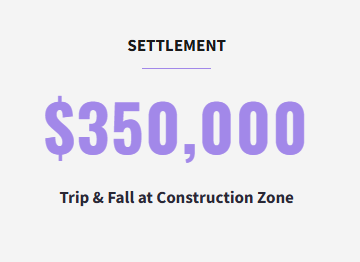
Real case results: We've secured $350,000 in a construction zone trip & fall. Other cases include $2 million in premises liability cases and $1.25 million for motor vehicle accidents. Construction cases often involve higher settlements due to severe injuries and multiple liable parties.
-
How long do I have to file a construction accident claim in Dallas?
Texas generally allows two years from the accident date to file a personal injury claim. However, construction cases involve complex deadlines, especially with multiple parties, OSHA investigations, and workers' compensation claims. Don't wait—evidence preservation and witness availability are time-sensitive.
MR.LAW uses cutting-edge technology and proven processes to build the strongest possible case. We meticulously investigate every aspect: OSHA violations, safety protocol failures, equipment defects, and third-party negligence.
-
What if I was partially at fault for my construction accident?
Texas follows a "modified comparative fault" rule, meaning you can still recover compensation even if you were partially responsible for your accident—as long as you're less than 51% at fault. However, your compensation will be reduced by your percentage of fault.
Don't let employer blame tactics discourage you. Construction companies often try to shift blame to injured workers to avoid liability. At MR.LAW, we aggressively counter these tactics by investigating the true causes: inadequate training, unsafe working conditions, OSHA violations, or defective equipment. Even if you made a mistake, employer negligence is often the primary cause of construction accidents.


-
"Attorney Raphael & Attorney Mathias are both very forthcoming & handle each case with care!"I have worked with this office on many different life care plans for personal injury cases and each time it’s been wonderful. Attorney Raphael and Attorney Mathias are both very forthcoming and handle each case with care. I would definitely recommend them!- Brandy C.
-
"Damon took my case when others would not consider it."
Damon is the one attorney who took my case when others would not consider it. He is good at explaining the next steps and possible outcomes. Professionalism shows through in all he does. I recommend him for your legal matter.
- Carolyn -
"Mr. Mathias went above and beyond for me!"
Mr. Mathias went above and beyond when I got in an automobile accident making the situation stress free. He allowed me to concentrate on getting a new vehicle and getting the appropriate treatment instead of worrying about medical bills and settlements.
- James -
"Truly amazing attorney!"
Truly amazing Attorney! This guy went above and beyond my expectations, from a broken wired up jaw. To a well deserved settlement. Thanks again!
- S. Plowden -
"Better outcome than imagined."
MR.LAW Accident and Injury Attorneys handled our case well and gave us a better outcome than we could have ever imagined. Thanks to Damon, Ori and their entire team!
- Eric B. -
"Attorney Ori Raphael fights for you!"Ori gives it his all to fight for you!- Amir A
-
"Hire these guys!"These guys are great! Ori really went above and beyond and every time I needed good advice or help, he was there for me.- R.J.
-
"Mr. Raphael was very helpful and responsive to our needs!"Mr. Raphael was very helpful and responsive to our needs. He provided excellent service with polite,gentle and sensitive care,from the time he greeted us all through the process. I felt very confident trusting him with our case and he came through for us and got us more than we imagined.- Avi P.