Dallas Premises Liability Attorney
Unsafe Property Injury Claims in Dallas
A premises liability claim may arise when a person, business, or entity controlling property knows or should know about a dangerous condition but fails to address it or warn a visitor, resulting in injury.
Premises liability concerns injuries caused by unsafe conditions on property controlled by another person, business, or entity. Under Texas law, the duty to address a dangerous property condition or warn a visitor can depend on the visitor’s legal status, the responsible party’s actual or constructive notice of the hazard, and the circumstances surrounding the injury. Constructive notice means the condition existed long enough that the responsible party reasonably should’ve discovered it.
If you’ve been injured on another’s property, contact us today for a free consultation with our premises liability attorneys in Dallas.

Trial-Ready Representation for Dallas Property Injury Claims
After an accident on unsafe property, you need to protect your rights while focusing on your recovery. Our Dallas premises liability lawyers at MR.LAW Accident and Injury Attorneys handle each stage of the legal process on your behalf.
That representation includes confronting insurers and pursuing bad faith insurance claims when an insurance company wrongfully denies compensation or provides insufficient benefits.
We evaluate the injury’s financial and personal effects, including medical expenses and rehabilitation needs, then build the claim around the available evidence.
Trial attorneys Damon Mathias and Ori Raphael lead our firm with more than 20 years of personal injury litigation experience in Texas. We’ve recovered tens of millions of dollars for injured clients and report $2 million settlements in premises liability cases. We create a custom strategy for each client and take over communications with insurers and opposing counsel during the claim.
Visitor Status Under Texas Premises Liability Law
Texas law generally evaluates the duty of care according to whether the injured visitor was an invitee, licensee, or trespasser. A classification doesn’t automatically establish or defeat a claim. The reason for the visit, the parties’ knowledge of the condition, and the available evidence still matter.
- Invitees: Customers and others who enter for the owner’s business purpose are generally owed reasonable care concerning dangerous conditions that the owner knew or reasonably should’ve known about.
- Licensees: Social guests and others who enter with permission for their own purposes are generally entitled to warnings about dangerous conditions known to the person controlling the property.
- Trespassers: Property owners generally must refrain from causing harm through willful, wanton, or grossly negligent conduct.
An open and obvious condition, or one already known to an invitee, can affect whether the owner had a duty to warn. These issues require a fact-specific analysis, particularly when a claim involves foreseeable criminal conduct by a third party.
Property Conditions That Can Lead to Injury Claims
We handle claims involving injuries in someone else’s home, a retail store, or on government-owned grounds. The setting alone doesn’t establish responsibility. A claim depends on the property condition, who controlled the premises, what the responsible party knew, and how the condition caused the injury.
Premises liability matters may involve:
- Slip and fall accidents caused by slippery substances or dangerous common-area conditions.
- Negligent security claims involving inadequate measures against foreseeable criminal activity.
- Assaults by employees of an establishment.
- Vehicle intrusion accidents on another party’s property.
- Inadequate safety barriers, pool hazards, animal attacks, or falling objects.
Each incident requires an individual review. The presence of a hazard doesn’t by itself prove that an owner or another party is legally responsible.
Elements of a Texas Premises Liability Claim
A claimant generally needs evidence connecting an unreasonable property hazard to both the responsible party and the resulting injury. The precise legal standard can differ based on visitor status and other circumstances.
Common factors evaluated in these claims include:
- Unreasonable risk: A condition on the property presented an unreasonable risk of harm.
- Notice: The responsible party had actual or constructive notice of the dangerous condition.
- Reasonable care: The owner failed to take reasonable steps to reduce the risk or provide an adequate warning.
- Causation: The dangerous condition proximately caused the injury, meaning it was a substantial factor in producing the harm.
Evidence concerning the condition, the injury, and the resulting losses can be important when evaluating each of these factors.
Damages Evaluated After a Property-Related Injury
Compensation in a premises liability matter depends on the harm supported by the evidence. Economic damages address measurable financial losses, while noneconomic damages address personal effects that don’t have a fixed invoice or wage record.
- Economic damages: Medical expenses, lost wages, reduced future earning capacity, and property damage.
- Noneconomic damages: Physical pain, mental anguish, disfigurement, physical impairment, and loss of enjoyment of life.
- Exemplary damages: Additional damages that may be considered separately from compensatory damages in a case involving gross negligence.
Not every category applies to every claim. We assess the losses tied to the injury and pursue the categories supported by the facts.
Texas Deadlines & Shared-Fault Rules
Texas Civil Practice and Remedies Code Section 16.003 generally provides two years from the date of injury to file a personal injury lawsuit. Waiting can also make it harder to preserve documentation and evaluate the dangerous condition as it existed when the accident occurred.
Texas proportionate responsibility rules can reduce a claimant’s recovery by that person’s assigned percentage of fault. A claimant found 51% or more responsible can’t recover damages. Awareness of a hazard may be considered when evaluating comparative negligence, but it doesn’t automatically decide the entire claim.
Government-owned property presents added timing concerns under the Texas Tort Claims Act. Formal notice requirements can be much shorter than the general filing deadline, and the applicable procedure can vary by jurisdiction. Prompt review is important when a city, county, or another government entity owns or controls the premises.
Our Premises Liability Case Process
We begin with an initial consultation about how the accident happened and what may come next.
Our process includes:
- Initial discussion: We review the accident and the circumstances surrounding the injury.
- Claim investigation: We gather relevant records and evaluate documentation concerning the premises, injuries, and losses.
- Case communication: We handle communications with insurers and opposing counsel while providing ongoing updates.
- Negotiation or litigation: We pursue resolution and can proceed to mediation or trial when needed.
If a case doesn’t settle, it may proceed to mediation or trial in a Dallas County courtroom. Any result depends on the evidence, applicable law, and decisions made during the legal process.
Request a Free, Confidential Case Evaluation
We offer free, confidential evaluations to prospective clients in the Dallas area. Our personal injury cases are handled on a contingency fee basis, so there are no upfront legal fees and no fee is owed if the case isn’t won.
Get trial-ready representation built around your circumstances. Contact us today.
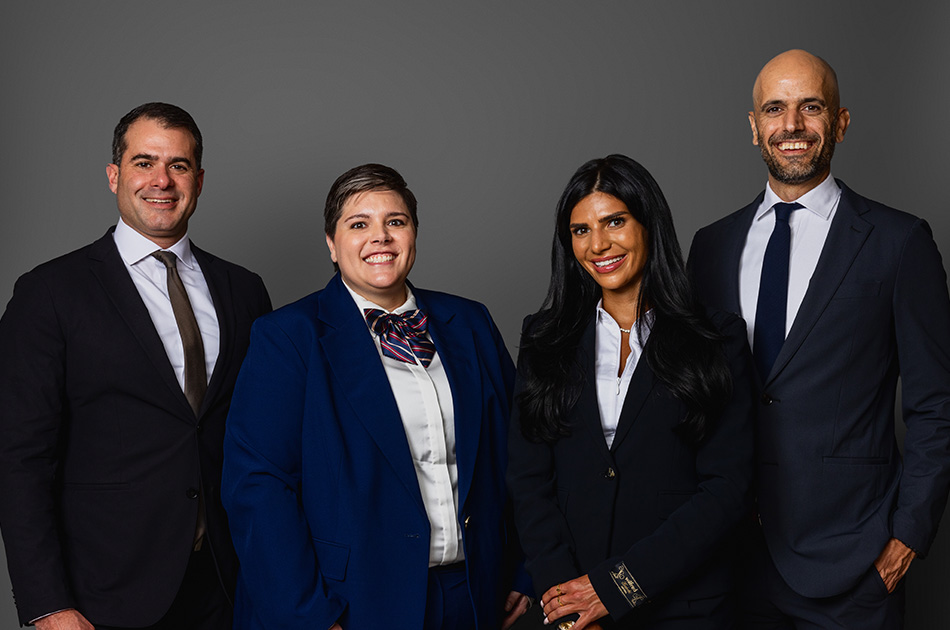
Trust Our Team at MR.LAW
-
Fighting Tirelessly for Victims of Negligence in TX
At MR.LAW Accident and Injury Attorneys, we have extensive experience helping individuals file premises liability claims after sustaining injury due to accidents, such as slip and falls.
We take the necessary measures to hold the negligent parties accountable for their actions whether the accident occurred in:
- Someone else’s home
- In a retail store
- Or on government-owned grounds
We proudly serve clients throughout Dallas, the surrounding areas, Houston, and even Chicago.
-
Types of Visitors Who Can Pursue Compensation
One of the first things that will be established in your case is the type of visitor you were at the time of the incident. Invitees, licensees, and trespassers may all have grounds to pursue compensation, depending on the specific circumstances of the case. See if you fit into the following categories:
Invitee
When you have the consent or permission of the owner of the property to enter the premises, you are considered an invitee. An invitee is typically used as a category for individuals who enter a premises for the purpose of business – such as an individual who comes to a grocery store to spend money.
Both parties benefit from the presence of the individual, and the property owner owes the invitee the highest level of care. This means that the property owner regularly inspects for hazards, warns invitees of potential hazards, and takes care of potential hazards as soon as possible.
Licensee
When you have the consent or permission of the owner of the property to enter the premises (without business involved), you are considered a licensee.
A guest to a property owner’s home is an example of a licensee. While the property owner is expected by law to warn his or her guests about potential hazards on the premises, he or she is not necessarily obligated to inspect or fix these known hazards.
Trespasser
When you enter a property without the permission of the owner, you are considered a trespasser. Although property owners are not responsible to warn undiscovered trespassers of potential dangers on the premises, they are responsible for any “booby traps” that they may have set up.
They are also responsible to warn about extremely hazardous risks on the property through signage or some other way of communication. The type of visitor you were at the time of the incident could affect what compensation you receive. Our firm can listen to your side of the story and fight to make sure your rights as a visitor, regardless of what type, are fought for.
-
What Are Common Premises Liability Injuries & Accidents?
There are a variety of situations in which you may have been injured and in which the property owner may be legally held responsible for those injuries.
The following are common hazards occurring in premises liability cases:
Ice, Liquids, Slippery Substances
As a visitor, you ought to be reasonably warned about or prevented from coming into contact with a hazardous condition such as ice, spilled liquids, or anything that could cause a slip and fall accident.
Insufficient Safety Barriers
These can cause falls from stairs, walkways, elevators, or other areas. In many cases, these incidents are due to a lack of foresight or inspection on the part of the property owner.
Negligent or Insufficient Security
Property owners are obligated to keep things reasonably safe. This can include making sure that there are sufficient security measures in place, such as good lighting and an adequate number of security guards in a given area.
Inadequate Safety Measures
When an individual is hurt or even fatally injured by toxic chemicals, electric shocks falling objects, swimming pool drownings or other such incidents on a property, the owner may be held liable for not ensuring proper safety measures were followed.
Insufficient Screening Measures
In some cases, hiring standards are lax and a visitor can be injured by an employee or other individual on a property. The owner may be able to be held responsible in part for inadequately looking into an employee’s background etc…
Animal Attacks
Most commonly, visitors might be attacked by a dog or other domestic animal. The owner may be held liable for not properly securing their animal or for not warning of the animal or taking measures to prevent such an incident from occurring on their property.
For information specific to your case, please don’t hesitate to get in touch with our legal team. In a free consultation, we can help walk you through your options and shed light on the circumstances you face.
-
Proving Fault in a Texas Premises Liability Case
In order to pursue compensation after an incident such as the above, you must prove that the property owner is liable for any injuries you may have experienced. Our team can comb through the evidence and help you build a strong case against the property owner.
In Texas, four elements must be proven in order to successfully win a premises liability case:
- That there was a reasonably hazardous or risky condition that posed potential harm to people who were legally on the property.
- That the owner of the property, or representative thereof, should have reasonably known about that condition and the potential harm it posed.
- That the owner of the property, or representative thereof, failed to take reasonable steps to prevent the condition’s existence or to protect visitors from the condition.
- That the condition directly caused the victim’s injury.
-
Reasons to Hire Our Dallas Premises Liability Firm
- Proven Results
- Creative Approach
- Free Case Evaluations
- Direct Access to Your Attorney
- Experience Against the Government
- Never Settle for an Insufficient Claim
-
Suffered an Injury Because of Faulty Construction?
Accidents that are the result of dangerous or defective conditions on a property, whether interior or exterior, are known as “premises liability” accidents. Homes—along with commercial buildings and public property—can be dangerous for faulty design, inferior building materials or construction, lack of maintenance, or hazardous clutter.
The following are two elements to establish who is at fault for a premises liability accident:
- The property owner has a legal duty to anyone who enters or lives in the property not to subject these individuals to an unreasonable risk of injury due to the design, construction, or condition of the property.
- The injured party must use the property normally. Property owners are not responsible for injuries of individuals who acted in a dangerously careless, unexpected, or unauthorized manner.
For example, if a tenant or guest is injured in an accident on rental property, the party responsible for maintaining the area or condition that caused the accident is liable to pay for any losses suffered by the victim. The landlord is responsible for everything outside the apartment (entrances, hallways, stairs) and for the immovable objects inside (ceilings, walls, floors, fixtures, and appliances that came with the apartment), while the tenant is responsible for the movable items inside an apartment.
-
What Are the Most Common Types on Premises Liability Claims?
Some of the most common premises liability matters we handle include:
- Falls: When you enter a home, office building, or other property, you can reasonably expect to receive a fair warning about dangerous conditions, such as slippery walkways, ice on the ground, holes in the floor, etc. A property owner’s failure to provide adequate warning and maintenance can lead to serious falls and devastating injuries to the head, neck, spine, joints, etc.
- Dog bites: Many dog owners fail to properly restrain their pets or provide sufficient warning about aggressive or dangerous animals, which can lead to dangerous, violent attacks and painful injuries.
- Swimming pool accidents: Swimming pools are notoriously dangerous, especially for children, and pool owners bear the responsibility for taking reasonable precautions to ensure that their property is guarded and maintained and that persons who use the pool are adequately supervised.
- Fires: There are a number of ways property owners can accidentally cause fires, including negligently failing to secure electrical wiring, contain gas leaks, or fix electrical outlets that are not working correctly. In such cases, property owners may be responsible for damage resulting from related fires.
- Insufficient security: Sometimes people may be harmed on a property as a result of the owner’s failure to install an alarm system, maintain door locks, hire security staff, or otherwise provide effective reasonable security.
-
What Is the Standard of Care?
Premises liability cases emerge when the owner or tenant of a property fails to exercise an appropriate standard of care. When we enter another person’s property, we expect to be safe from danger. While not every threat can be eliminated, there are reasonable precautions that can protect us from accidents or intentional violence. You may have a case if you were injured at a location where the owner failed to do one or more of the following:
- Clean up or indicate ice, liquids, or slippery substances
- Erect safety barriers near stairs, walkways, or other dangerous areas
- Take reasonable security measures
- Restrain a dog or other domestic animal
-
What is Attractive Nuisance?
In Texas (as in many other U.S. states), the attractive nuisance doctrine is a legal principle that holds property owners responsible for injuries to children who are attracted to and harmed by dangerous conditions or objects on their property—even if the children were technically trespassing.
An "attractive nuisance" is something on a property that is:
- Artificial (man-made) – like a swimming pool, trampoline, old car, abandoned appliance, etc.
- Potentially dangerous – it poses a risk of injury or death.
- Likely to attract children – because of its appearance or the potential for play.
- Not easily understood by children – meaning kids may not recognize the danger.
- Easily accessible – the property owner hasn’t taken reasonable steps to keep children out.
In plain terms, if a property owner knows (or should know) that something on their property could draw children in and harm them, they are legally required to take reasonable precautions—like fencing off a pool or locking up equipment.
For example, if a homeowner in Texas has an unfenced swimming pool and a child wanders in and drowns, the homeowner might be liable under the attractive nuisance doctrine, even though the child was trespassing.
This doctrine mostly applies to young children—courts assume older teens are more capable of understanding risk. Natural things like ponds, trees, or cliffs usually don’t count as attractive nuisances. Texas courts evaluate these cases individually, based on reasonableness and foreseeability.
-
"Attorney Raphael & Attorney Mathias are both very forthcoming & handle each case with care!"I have worked with this office on many different life care plans for personal injury cases and each time it’s been wonderful. Attorney Raphael and Attorney Mathias are both very forthcoming and handle each case with care. I would definitely recommend them!- Brandy C.
-
"Damon took my case when others would not consider it."
Damon is the one attorney who took my case when others would not consider it. He is good at explaining the next steps and possible outcomes. Professionalism shows through in all he does. I recommend him for your legal matter.
- Carolyn -
"Mr. Mathias went above and beyond for me!"
Mr. Mathias went above and beyond when I got in an automobile accident making the situation stress free. He allowed me to concentrate on getting a new vehicle and getting the appropriate treatment instead of worrying about medical bills and settlements.
- James -
"Truly amazing attorney!"
Truly amazing Attorney! This guy went above and beyond my expectations, from a broken wired up jaw. To a well deserved settlement. Thanks again!
- S. Plowden -
"Better outcome than imagined."
MR.LAW Accident and Injury Attorneys handled our case well and gave us a better outcome than we could have ever imagined. Thanks to Damon, Ori and their entire team!
- Eric B. -
"Attorney Ori Raphael fights for you!"Ori gives it his all to fight for you!- Amir A
-
"Hire these guys!"These guys are great! Ori really went above and beyond and every time I needed good advice or help, he was there for me.- R.J.
-
"Mr. Raphael was very helpful and responsive to our needs!"Mr. Raphael was very helpful and responsive to our needs. He provided excellent service with polite,gentle and sensitive care,from the time he greeted us all through the process. I felt very confident trusting him with our case and he came through for us and got us more than we imagined.- Avi P.